Why Fall Lawn Aeration Makes Such a Difference
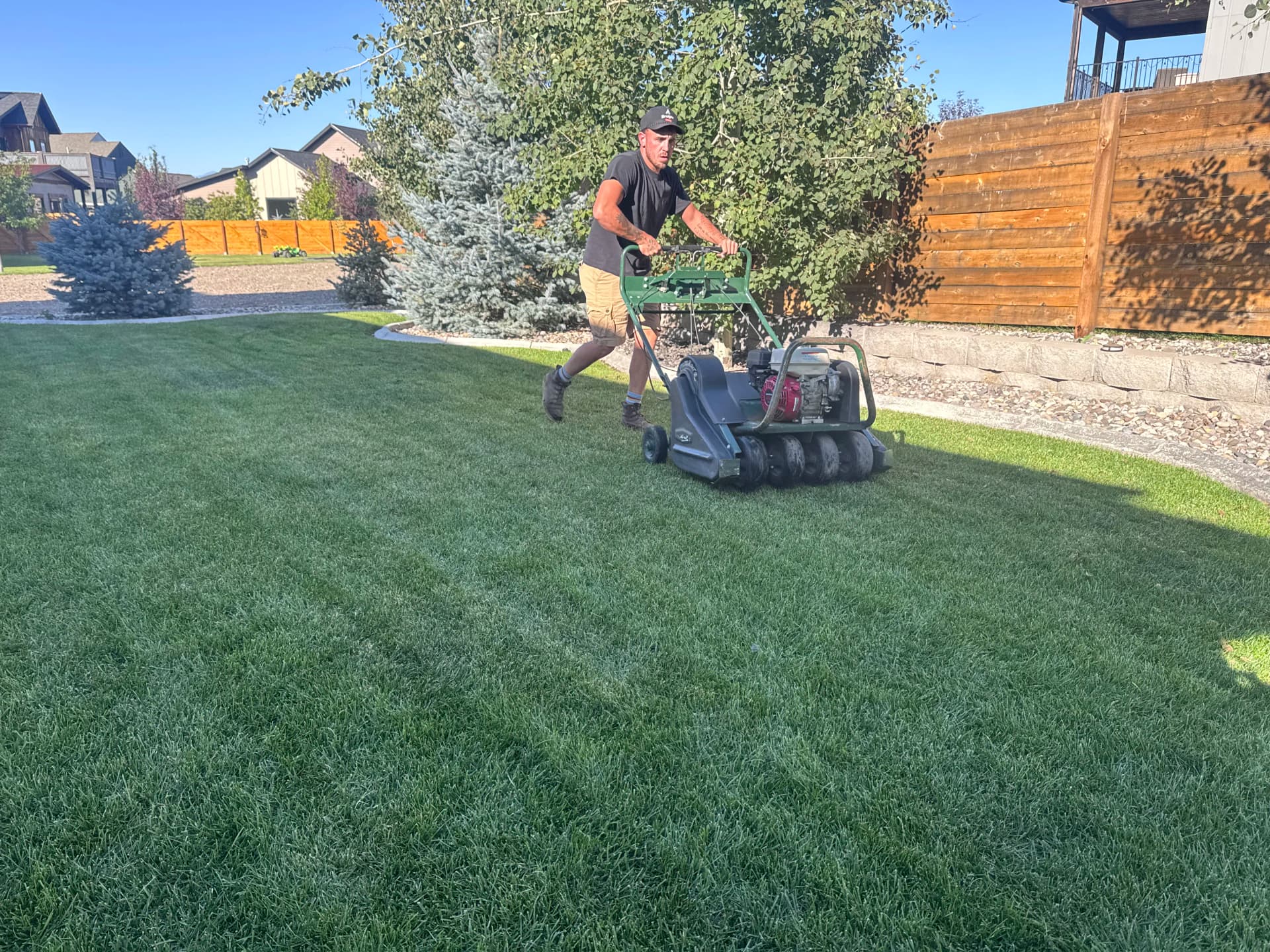
Compacted soil is one of the most common reasons lawns struggle - and most homeowners don't even realize it's the problem. When the ground gets tight and dense, water just runs off instead of soaking in. Nutrients can't reach the roots. Air gets cut off. The grass ends up stressed, thin, and fighting a losing battle no matter how much you water or fertilize.
That's exactly where aeration comes in. We use a core aerator to pull small plugs out of the soil across the entire lawn. It sounds simple, but what it does underneath the surface is significant. Those small channels let air, water, and nutrients get directly to the root zone - where the grass actually needs them. The result is stronger roots, better drainage, and turf that's built to handle whatever gets thrown at it.
Fall is genuinely the best window to get this done for cool-season grasses. The soil is still workable, the heat of summer has backed off, and the grass has time to recover and fill in before winter sets in. It's one of those services that pays off big the following spring when your lawn comes out of dormancy looking noticeably thicker and healthier than your neighbors'.
We keep our schedules tight this time of year because spots fill up fast. A lot of homeowners wait until they notice a problem, but aeration works best as a proactive step - not a rescue mission. If your lawn has been feeling lackluster or draining poorly, this is likely the fix it needs.